Traditional approach
Let me start with explaining what I have termed the ‘traditional’ creative approach that has been applied in many creative environments over decades. This generally starts with an individual - normally the appointed leader (title based), agency owner or client - having an idea or a need to create / supply an outcome. This is a solution that they aspire to have or believe is correct. The outcome or artefact is ‘pre-decided’ (by them), all that is required is finding a team to ‘mould’ the process to fit within their solution.
This approach or process is limited by what I term, a single NARROW THOUGHT PYRAMID (Figure 1).
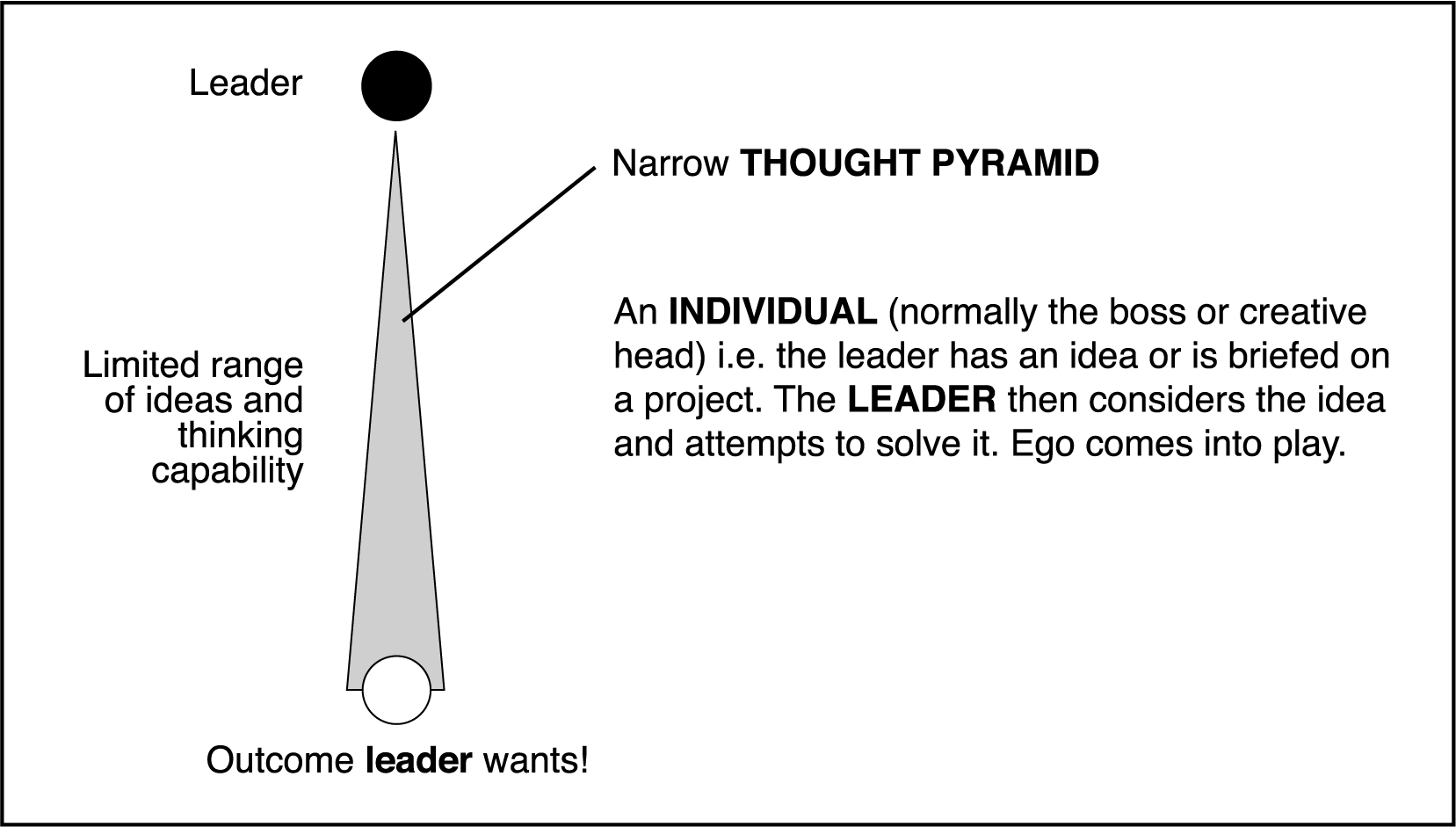
With limited individual capacity to generate an extensive range of ideas, debate the validity of these or view any opportunities from outside the square, the leader gets frustrated. The leader then brings in a ‘selection’ of new team members to extend the thinking around their original thoughts. Generally, the extended team is made up of members who will not ‘rock the boat’ or challenge leadership. They have been ‘chosen’. What happens next?
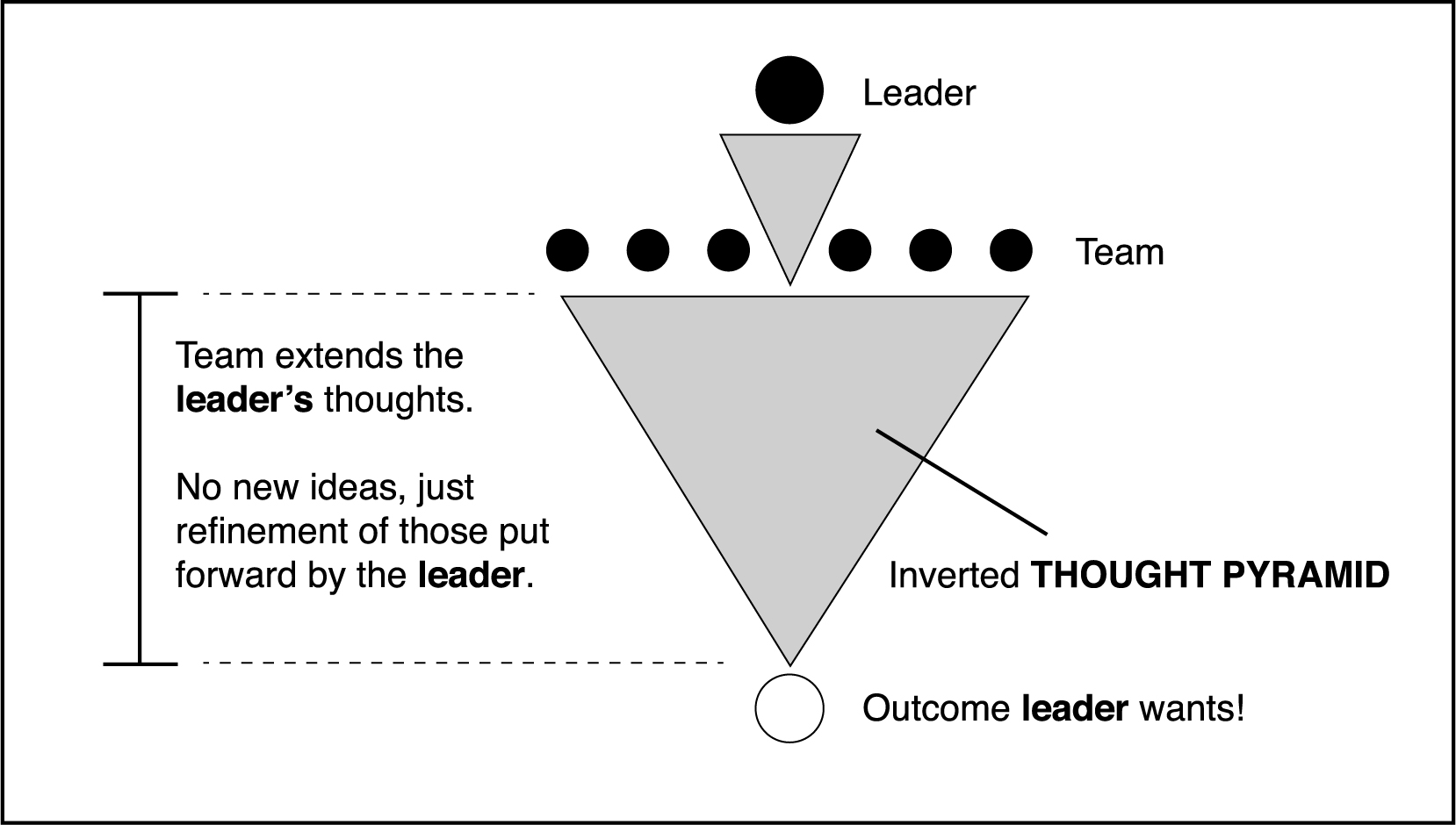
The Figure 2 illustrates how through what I term an INVERTED THOUGHT PYRAMID, the leader manages to bolster their ability to reach the desired outcome. Not a better or more strategic one, or in fact the correct one, but the outcome they wanted. The leader has successfully managed a self-fulfilling prophecy.
Alternative approach
I now propose we consider an alternative to the traditional management of the creative and critical thinking process within creative teams. A process I have termed FOCUSED OPEN THINKING (FOT).
At first glance the words used in the term may seem at odds but let us evaluate them individually.
- Focused
- The centre of interest or activity. Commitment to a goal.
- Open
- Allowing access, passage, freedom of entry and unrestricted thought.
- Thinking
- A process of considering, reason and imagination. A mind set.
Focussed Open Thinking
In this scenario the team members are not ‘hand-picked’, but selected on their:
- SKILLS
- KNOWLEDGE
- RESOURCES
- AVAILABILITY
- and are involved from the BEGINNING of the project.
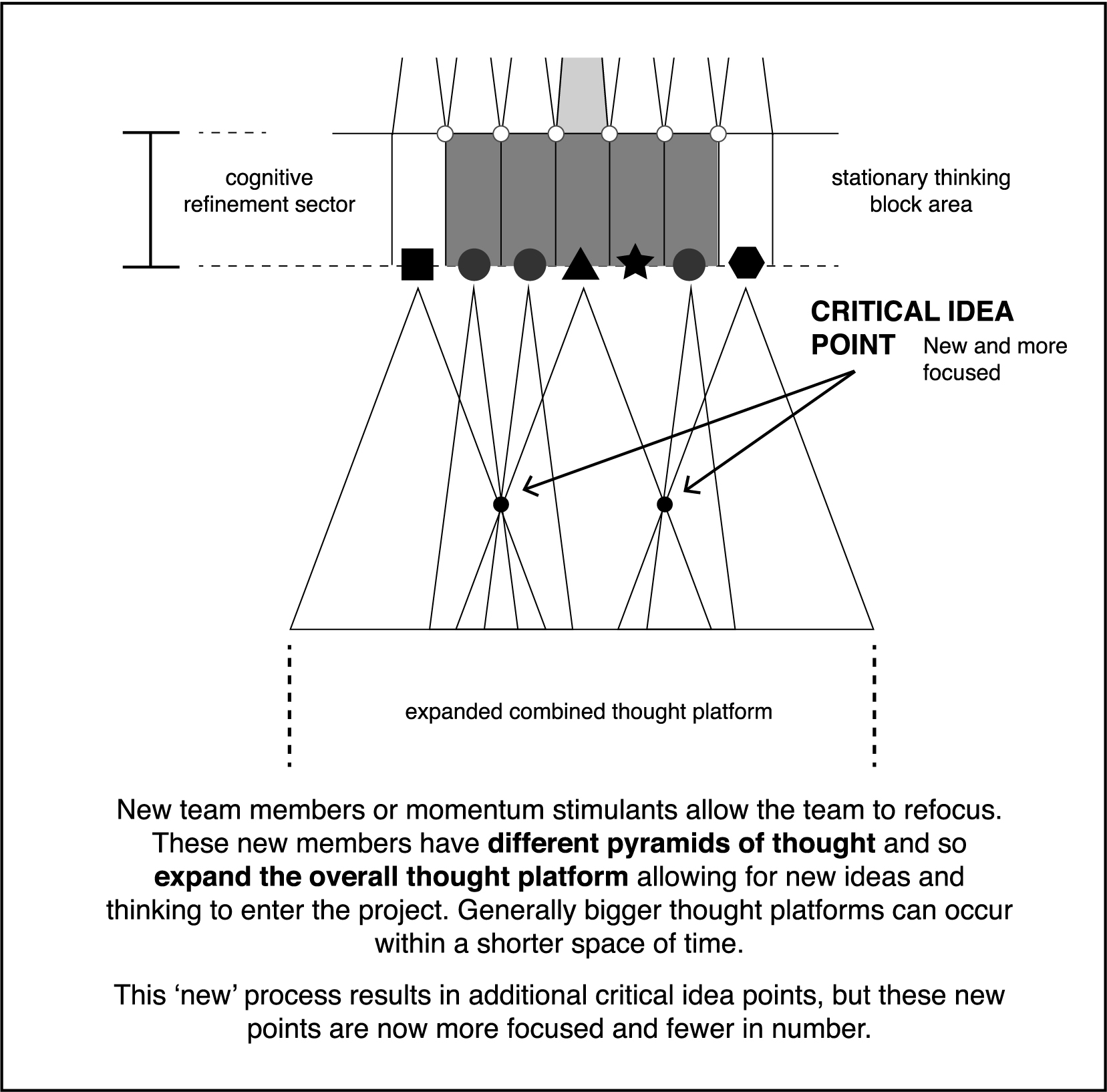
The result is that the team members each have their own THOUGHT PYRAMID and the OVERLAPPING of ideas has the effect of increasing the imagination / brainstorming platform or area. They are still aiming to find the correct or most appropriate solution, but the opportunity for idea generation has grown substantially.
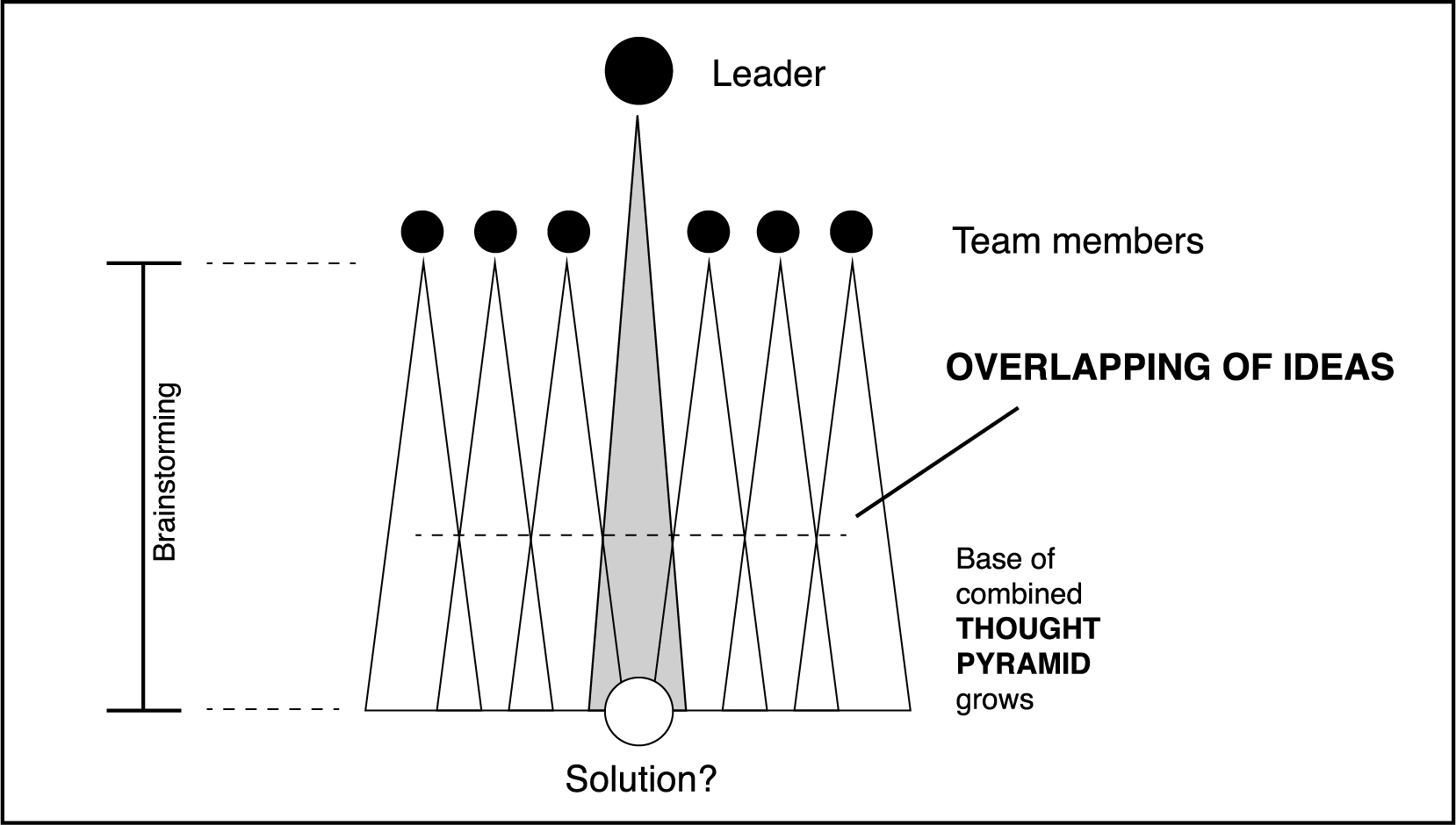
The overlapping thought pyramids offer up a series of intersecting points that I have termed CRITICAL IDEA POINTS. These points (Figure 4) allow for the introduction of additional skills and/or a temporary change of leadership. Not in title, but in positioning / action / role. It is about who is best suited to ‘leading’ the project at that particular point in time.
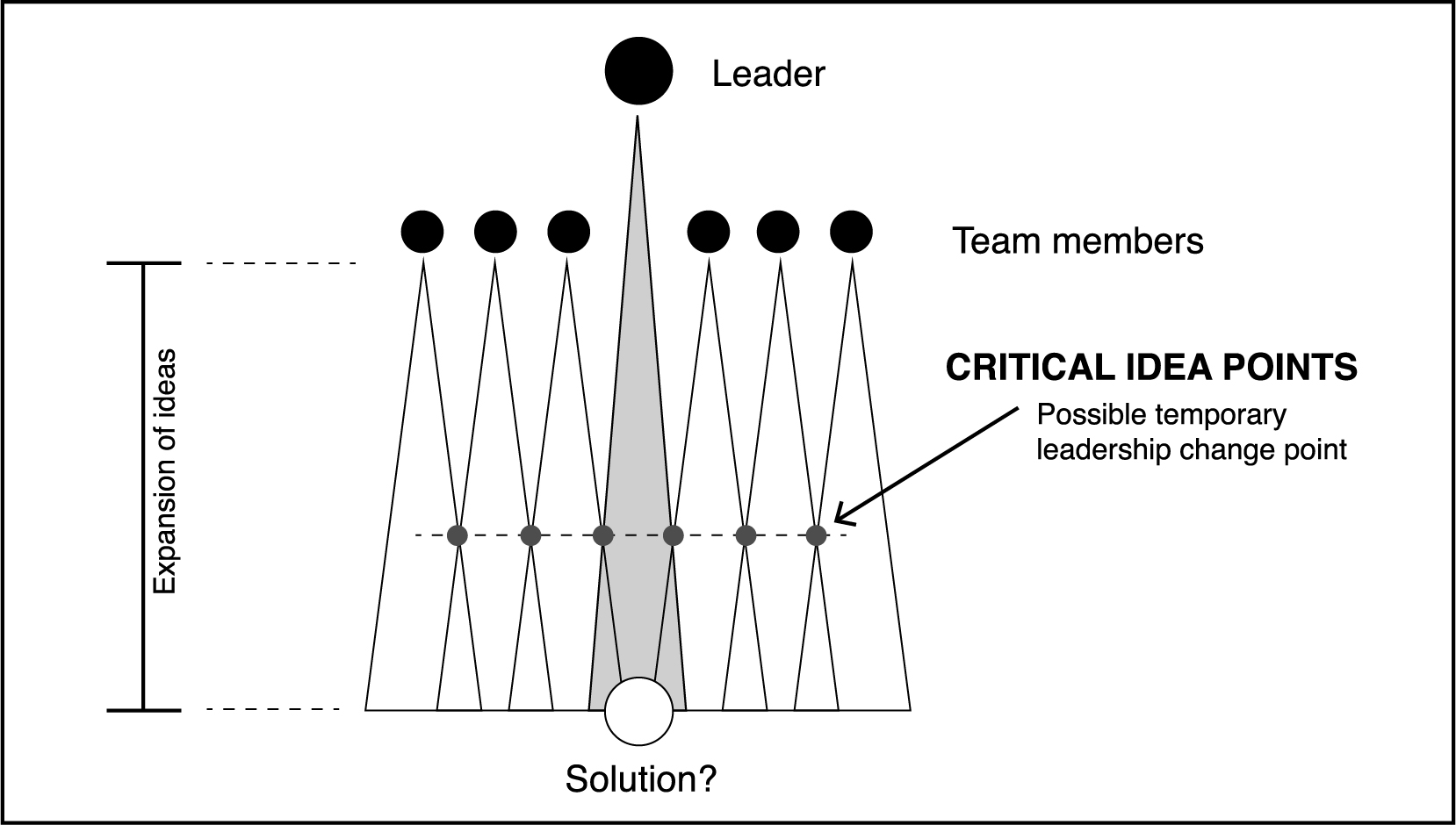
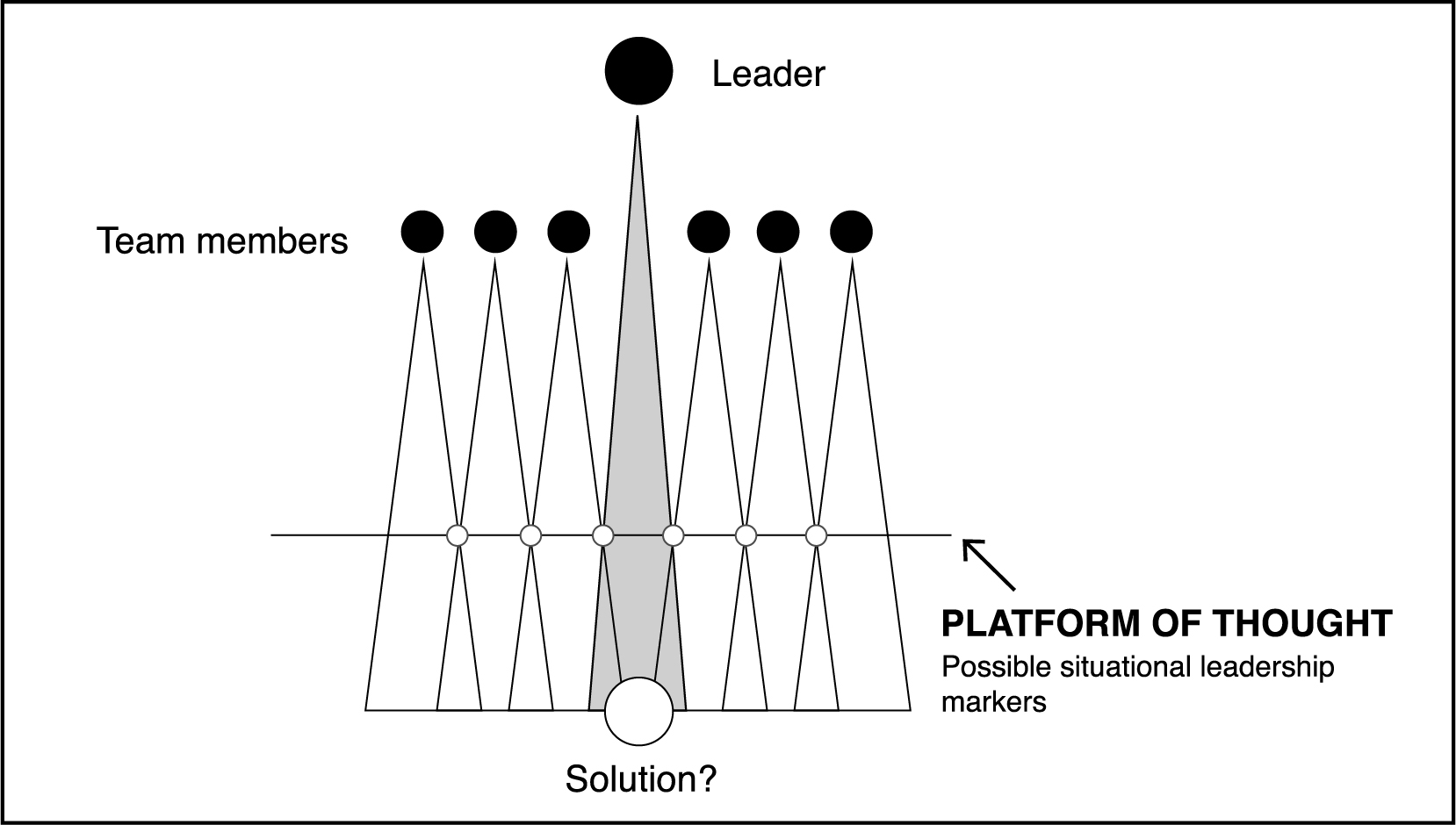
Critical Idea Points can be seen as possible temporary leadership change points. The points are aligned / positioned on an imaginary horizontal plain - termed a PLATFORM OF THOUGHT (Figure 5).
It is at each of these levels (viewed from above) that a series of CONCENTRIC CIRCLES appear (Figure 6). I am of the opinion that it is here that creativity stagnates and for a period of time and no new thoughts or extensions are able to be added.
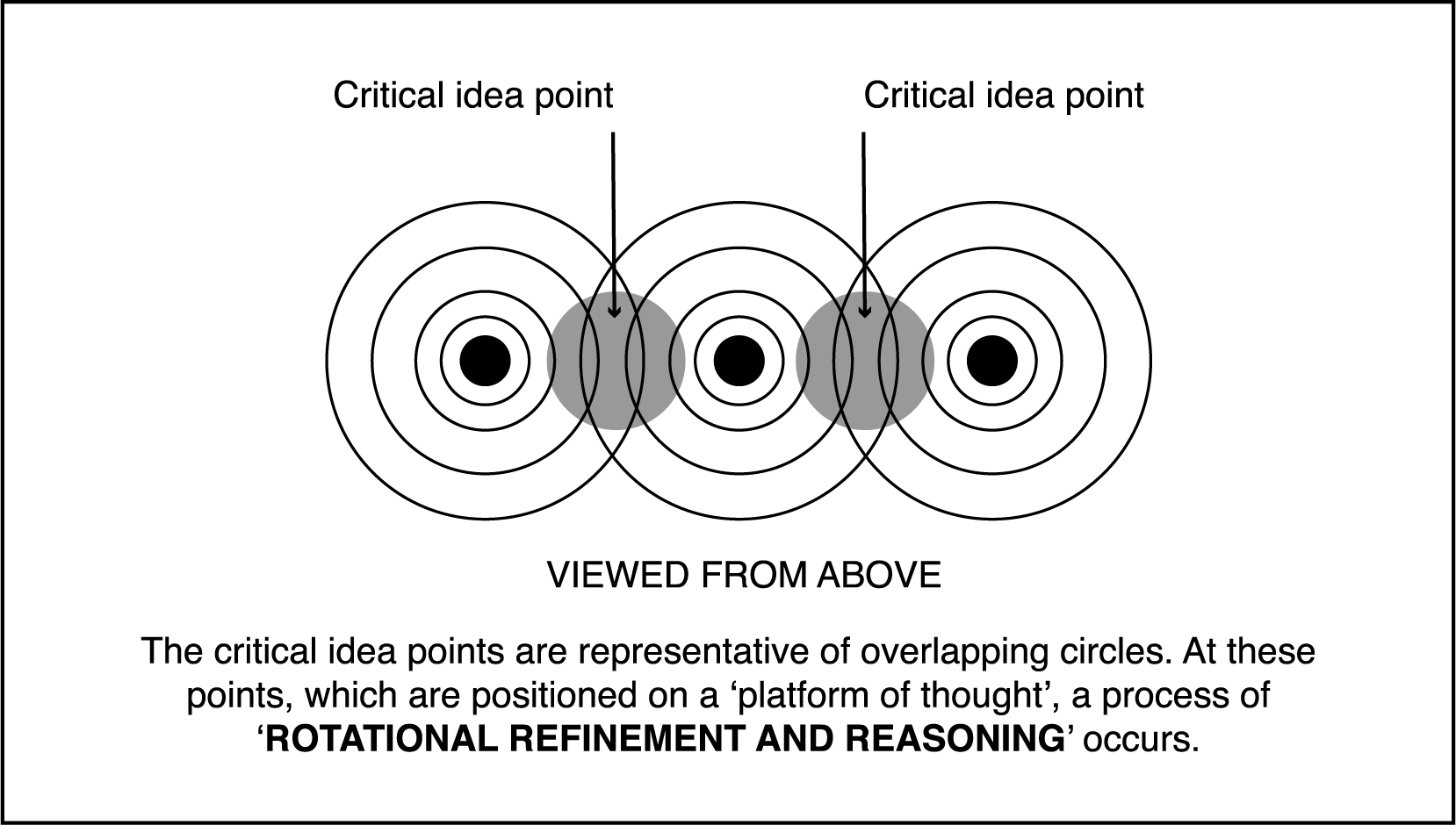
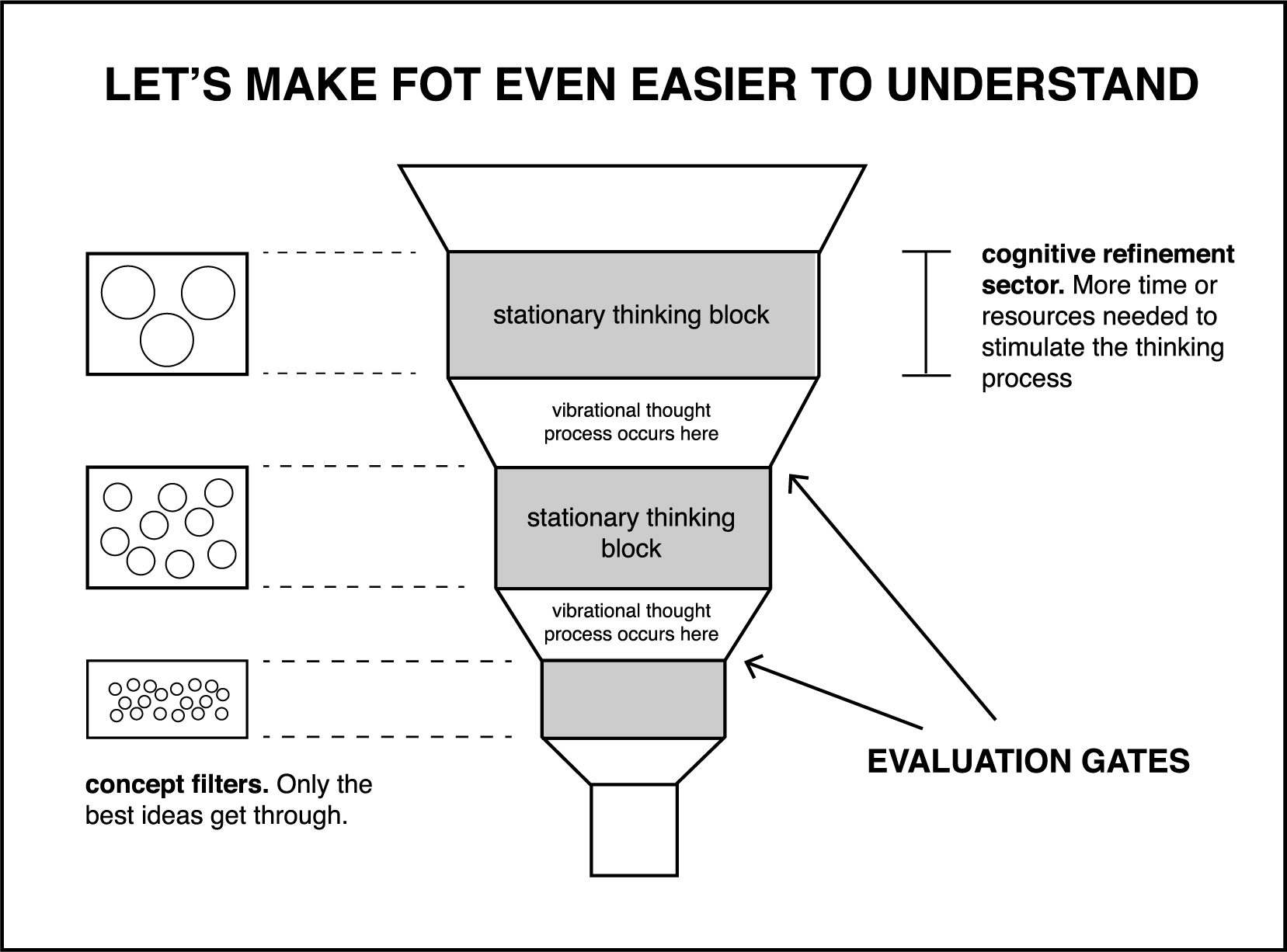
At these points, which are positioned on a platform of thought, a process of I have termed ROTATIONAL REFINEMENT AND REASONING occurs. It can be understood to be a cognitive refinement sector (Figure 11). You can think of this as a place or period in time when the creative process itself takes an audit of its ability to continue to ideate and produce quality creative output.
For a period of time (hour, day, week or year) the creative thoughts ‘drop vertically’ and run parallel to each other. I have defined this area as a STATIONARY THINKING BLOCK (Figure 7).
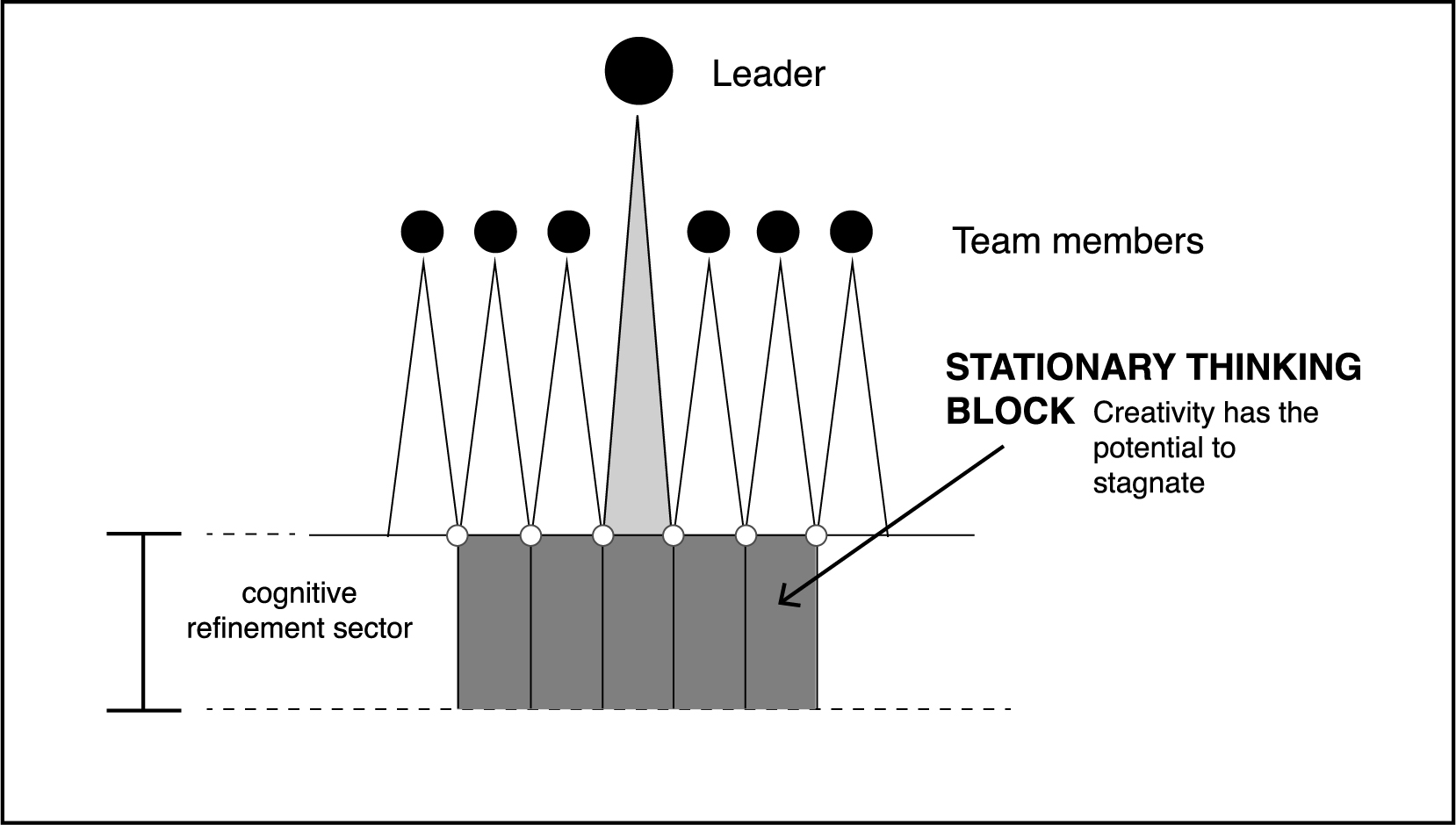
This is where the creative process ‘catches it breath’ and takes stock of where it is at. Generally, this is the point where a stimulus needs to be added or ‘removed’. This could be in the form of a new team member, an additional service or skill. I also believe that the role of the leader should be set aside or redefined. Leadership of the process needs to be temporarily transferred. For the creative process and innovation to occur, the TEAM DYNAMICS must change.
So why change the team?
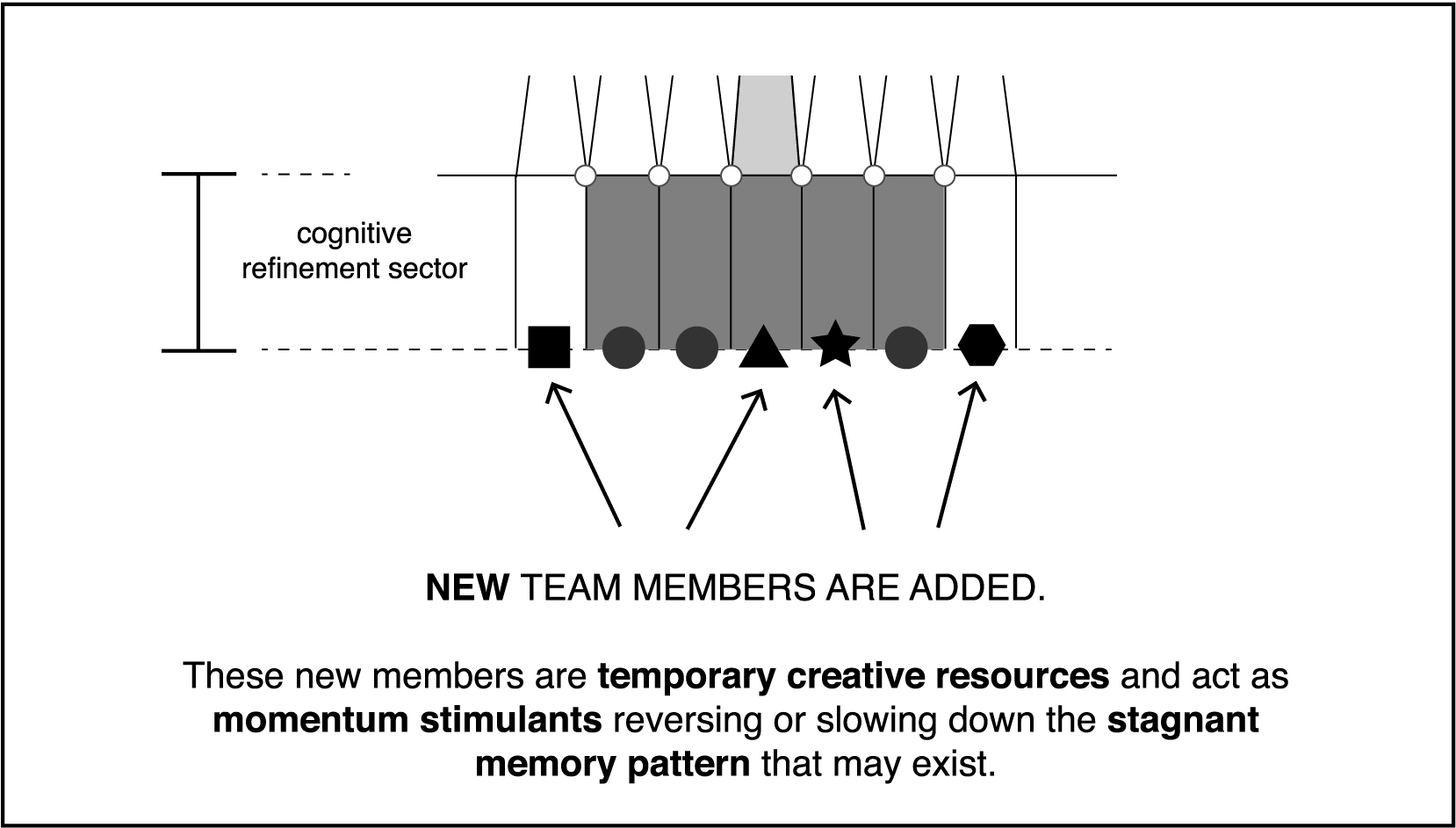
There are several benefits to adding new team members and replacing others. These new team members are considered what I term ‘TEMPORARY CREATIVE RESOURCES’. As a group the members need to identify current skills and services within the team that are still needed, recognise those need to be released and source / acquire those new skills / services that will be beneficial to the teams’ growth (Figure 8).
These are important to the overarching ideation and critical thinking process as it requires ‘MOMENTUM STIMULANTS’. These are brought in to reverse what I term the ‘STAGNANT MEMORY PATTERN’. In the STATIONARY HOLDING BLOCKS the creative process has flat lined. A temporary process of what I refer to as creative due diligence is taking place.
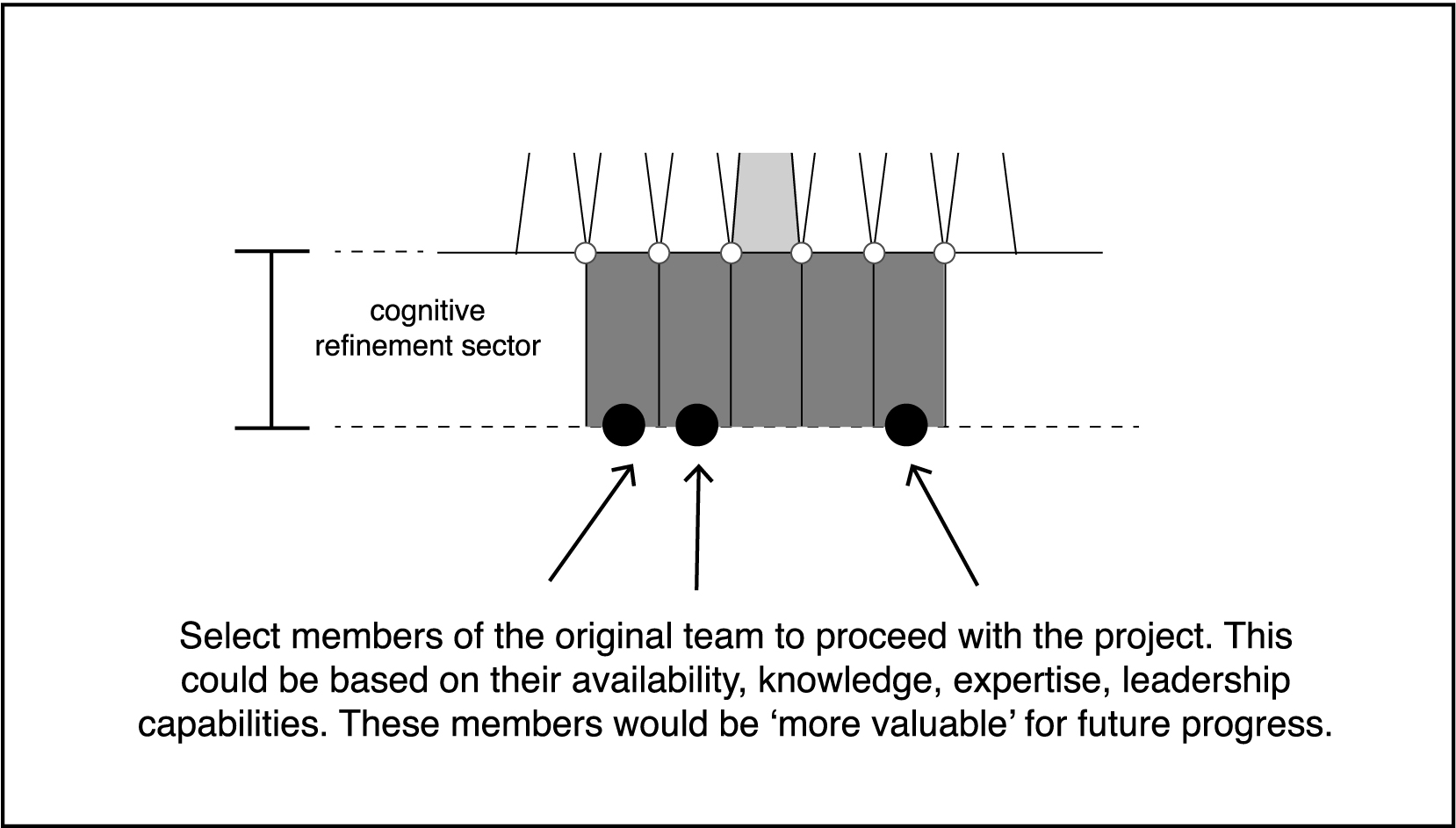
Members are validating their thought processes and current roles. They are reflecting on the creative outcomes to date, considering what needs to change in order to move forward. New temporary or situational leadership roles are established. This is temporary and will drive the creative process to another level. This process may occur several times.
Think along these lines
Ideas that have been processed are like little pebbles in a river getting ‘smoother’, more refined over a period of time (ideation). This is a naturally occurring process in constant flux due to the addition and removal of various stones (skills / services / resources). Some brought down river, others moving on. These could be bigger or smaller than the original stones and of varying grit. All are necessary ‘members’ of the process of creating smooth river stones.
By adding new team members, that are ‘rough’ (not influenced or affected by previous interactions) they will be able to add something to further ‘polish’ the ideas. Think of this as being a form of VIBRATIONAL THOUGHT or ABRASIVE THINKING. Added to the mix, it creates a natural flow of ideas. A series of measurement criteria and tools, Evaluation Gates, are put in place to ensure only the best ideas pass to the next stage. This may take the form of prototyping, user testing, feedback, reflection, refinement through iteration and ultimately implementation.