
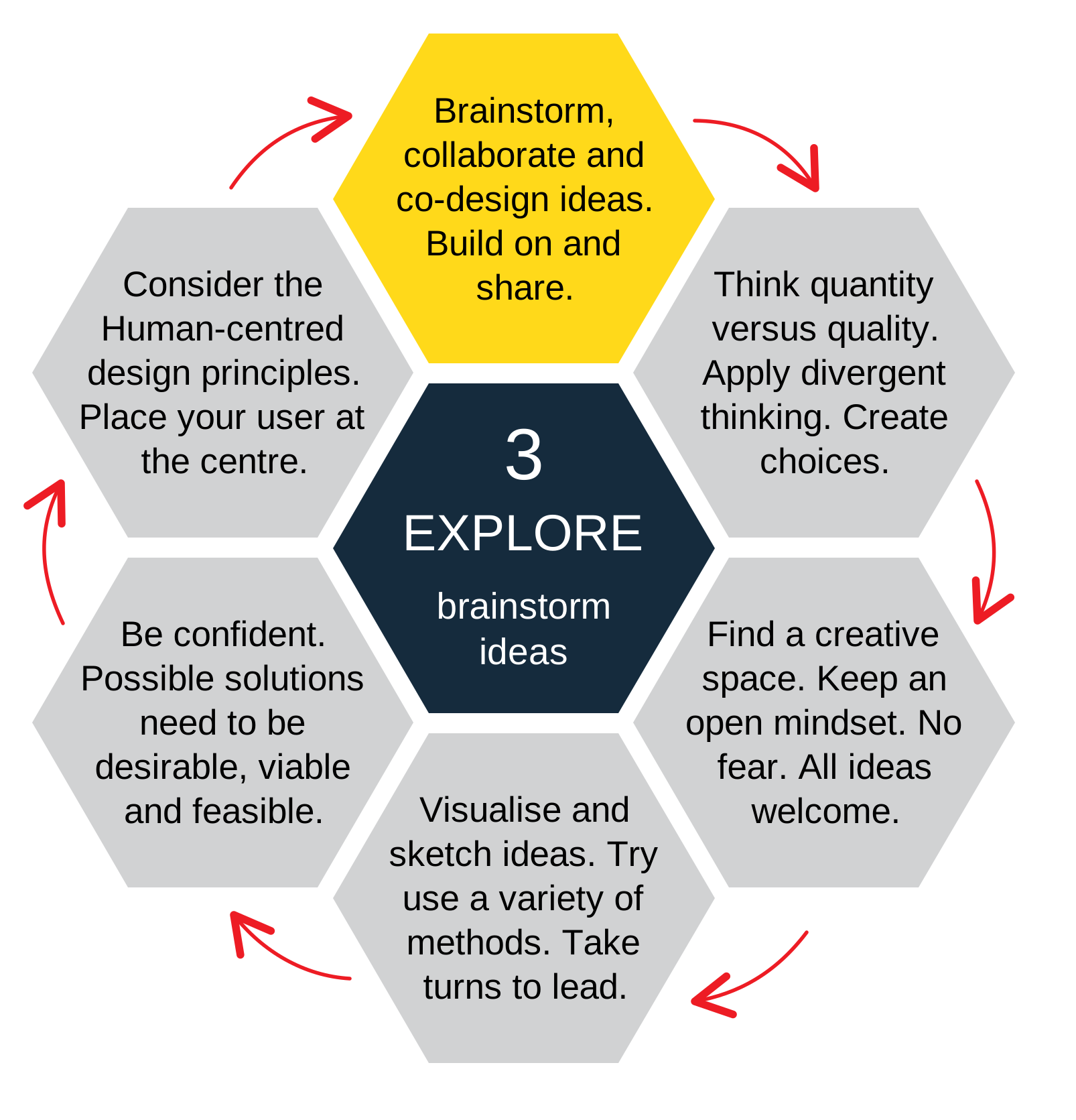
Stage 03

Explore

Create space for alternatives before committing to one direction.

Generate and stretch ideas before judging them. Look for desirable, viable and feasible directions. Explore possibilities from multiple perspectives, challenge assumptions and encourage divergent thinking to uncover unexpected opportunities. Build on the ideas of others, combine concepts in novel ways and push beyond obvious solutions. Create space for creativity before narrowing focus, ensuring the strongest opportunities emerge for further exploration and development.

Explore: brainstorm ideas

Generate ideas from a strong human-centred foundation

During the third stage of the 5E Design Thinking Framework, designers are ready to generate ideas. We call this the EXPLORE stage. You have grown to understand your users and their needs during Engage, and analysed your observations during Evaluate to create a human-centred problem statement. With this solid background, you and your team can look at the problem from different perspectives and ideate innovative responses to the problem statement.

Ideation is a crucial step in the design thinking process. It involves generating and developing a wide range of ideas and potential solutions to the problem identified during the earlier stages. The goal is to explore new possibilities, break free from conventional thinking and generate enough variety for ideas to be evaluated, tested and refined during the next stages of the process.

Develop, organise and compare the possibilities

After generating a large number of ideas, the team refines and develops them. Each idea can be considered for its potential to address the problem and developed further so that its feasibility, practicality and alignment with the project objectives become clearer.

Ideas are then grouped and categorised according to their themes, feasibility and potential impact. This reveals relationships, allows promising ideas to be combined and helps narrow the focus to a smaller set of possibilities without losing the breadth created through divergent thinking.

Select ideas worth taking forward

The final part of Explore is to evaluate and prioritise ideas according to their potential to solve the problem, their feasibility and their likely impact. The most promising possibilities are selected for further testing, prototyping and validation during Expand.

Explore encourages creativity, promotes innovation and creates a wide range of ideas that can be developed, tested and refined. By setting a clear objective, brainstorming, refining, grouping and prioritising ideas, the team can identify strong possibilities that respond to user needs and support the objectives of the project.

Core activities

Key steps involved in the ideation phase

01

Set a clear objective

Before starting ideation, define the problem that needs to be addressed and provide a clear direction for the session without narrowing the possibilities prematurely.

02

Brainstorm ideas

Generate as many ideas as possible without evaluating them. Encourage creativity, challenge bias and use brainstorming, mind maps, sketching, sticky notes and other ideation methods to create breadth.

03

Refine and develop ideas

Consider each idea’s potential to address the problem and develop it further. Explore whether it is practical, feasible and aligned with the objectives of the project.

04

Group and categorise ideas

Organise ideas according to themes, feasibility and potential impact. Use the emerging patterns to combine related concepts and identify the most promising directions.

05

Evaluate and prioritise ideas

Compare the strongest ideas against user needs, project objectives, feasibility and likely impact. Select possibilities for prototyping, testing and validation during the next stage.

From possibility to direction

Explore widely before choosing what to develop.

The ideation phase is critical to the success of the design thinking process. It helps the team generate a wide range of ideas, explore new possibilities and break free from conventional thinking.

Generation and judgement should be treated as distinct activities. First create breadth without prematurely dismissing unusual ideas. Then use the user evidence, problem statement and project objectives to refine, combine and compare the possibilities with purpose.

Methods to consider

Brainwriting, brainstorming, mind mapping, analogies, storyboarding and concept combinations.

Evidence and output

A diverse set of evidence-linked possibilities, with promising directions selected for development.

Why it matters

Key benefits of the ideation phase

Generates a wide range of ideas

Ideation encourages creativity and produces a large number of possibilities. This helps the design team consider genuinely different responses before selecting ideas that meet the needs of users.

Encourages collaboration

Ideation brings designers, stakeholders and subject-matter experts together. It supports teamwork, invites different perspectives and gives participants an opportunity to build upon each other’s thinking.

Promotes innovation

Exploring new possibilities and breaking free from conventional thinking allows the team to discover unexpected connections and develop solutions that may not otherwise have been considered.

Identifies the best solutions

Evaluating and prioritising the ideas helps the team identify the most promising possibilities: those with the strongest potential to address user needs and achieve the objectives of the project.

Methods and tools

Practical ways to work through Explore.

Open a focused guide while keeping the method connected to the broader framework.