
Stage 02

Evaluate

Turn collected information into a meaningful point of view.

Find themes, tensions and relationships. Reframe the initial issue into a focused, actionable challenge. Look beyond surface-level symptoms to uncover underlying needs, patterns and root causes. Connect insights from different sources, identify opportunities hidden within constraints and make sense of competing perspectives. Synthesize information into a clear problem statement that guides decision-making, inspires innovation and creates a shared direction for subsequent ideation, prototyping and testing activities.

Evaluate: the data collected

Organise, synthesise and articulate the real problem

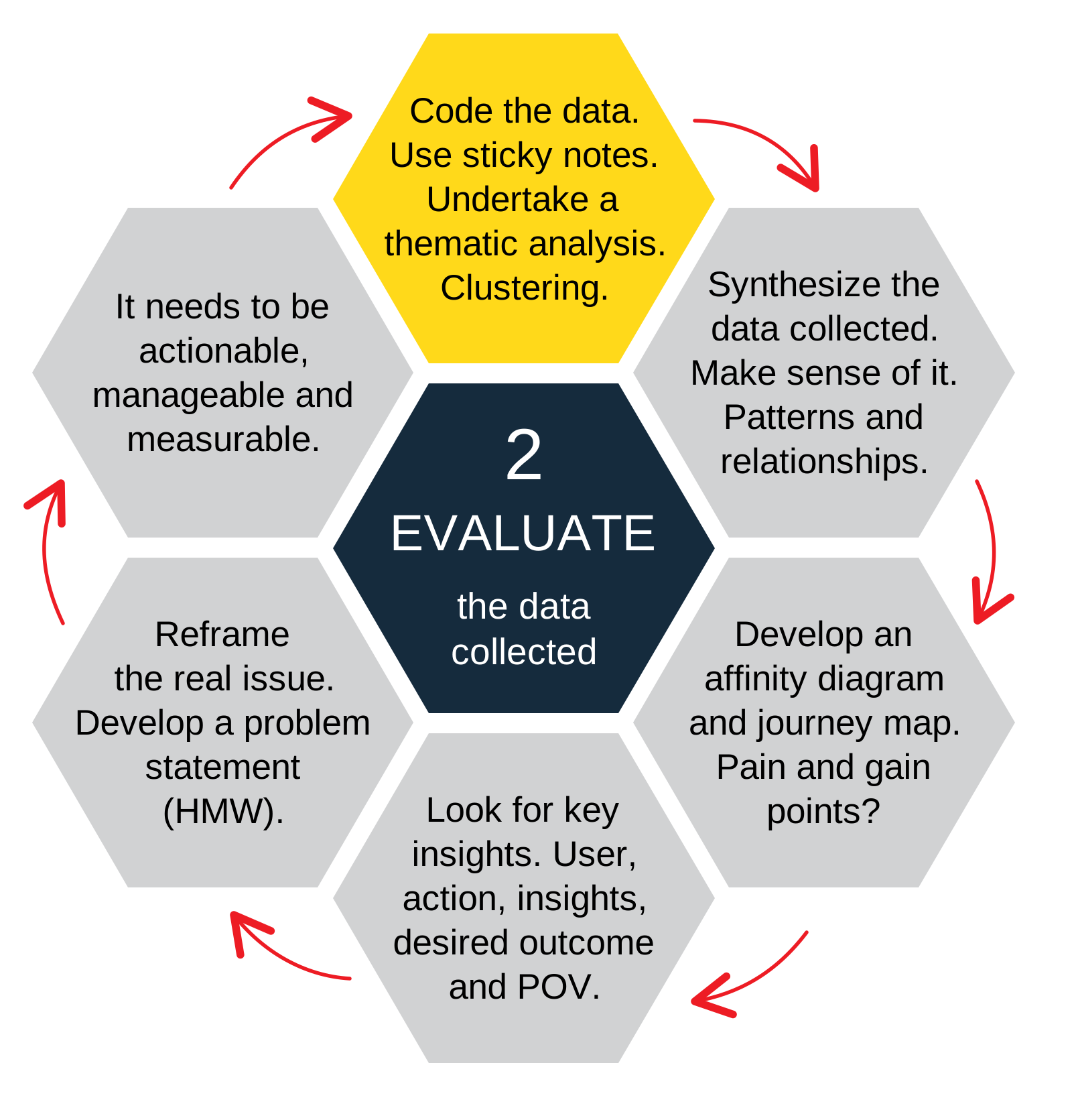
In the second step, EVALUATE (define or reframe) stage, you will organise the information you have gathered during the ENGAGE stage. This is the part of the process where you make sense of the data collected and through a process of synthesis arrive at a point where you can now visualise and articulate the real problem. You’ll analyse your observations to define the core problems you and your team have identified up to this point.

Defining the problem and problem statement must be done in a human-centred manner. The problem statement is often constructed using the phrase ‘How might we’. The EVALUATE stage will help the design team collect great ideas to establish features, functions and other elements to solve the problem at hand – or, at the very least, allow real users to resolve issues themselves with minimal difficulty.

Why defining or reframing matters

The EVALUATE (define or reframe) step is a crucial part of the design thinking process that helps teams identify and clarify the problem they are trying to solve. This step is important because a poorly defined or framed problem can lead to ineffective solutions, wasted resources and lost time.

The Evaluate, define or reframe step sets the foundation for the entire design thinking process. Without a clear understanding of the problem, it is impossible to generate innovative solutions. By focusing on defining or reframing the problem, teams can gain a deeper understanding of the issue, identify potential obstacles and develop a comprehensive plan to solve it.

Create an empathetic problem statement

After gathering information, the team can begin synthesising it to create a problem statement. The problem statement – often expressed as a ‘How might we?’ question – should be clear and concise, and it should accurately capture the nature of the problem.

The problem statement should also be empathetic. This means that the team should try to put themselves in the shoes of the stakeholders affected by the problem.

Core activities

What happens during Evaluate?

01

Organise

Bring the observations, quotations and research artefacts gathered during Engage together so the whole team can see and work with the evidence.

02

Synthesise

Cluster and code related material. Identify themes, tensions, relationships, exceptions and the needs hidden beneath surface-level symptoms.

03

Define or reframe

Translate the evidence into a focused, human-centred problem statement and ‘How might we?’ questions that guide purposeful exploration.

Problem framing

Make the challenge actionable, measurable and grounded in people.

The problem statement should be actionable and measurable, so the team can track its progress and evaluate the effectiveness of the solution.

By understanding the needs and perspectives of those affected by the problem, the team can develop solutions that are more effective and relevant. It is important to avoid assumptions and biases when defining or reframing the problem. This can be challenging, especially if the team has preconceived notions about the problem or is unfamiliar with the stakeholders affected by it. To avoid assumptions and biases, the team should seek feedback from a diverse range of stakeholders and ensure that the problem statement accurately reflects the input received.

Methods to consider

Affinity mapping, thematic analysis, journey mapping, personas, point-of-view and How Might We statements.

Evidence and output

A defensible problem framing that is specific enough to guide creative exploration.

Why it matters

Benefits to evaluating the problem.

Provides a roadmap

A clear problem statement provides a roadmap for the rest of the design thinking process. The team can use it to guide ideation, prototyping and testing activities.

Helps the team stay focused

A clear problem statement keeps attention on the most important aspects of the problem and reduces the risk of becoming sidetracked by irrelevant or tangential issues.

Inspires creativity and innovation

By focusing on the problem and its potential solutions, the team can generate ideas that may not otherwise have been considered.

Supports brainstorming

A clear problem statement can be used as a brainstorming tool, encouraging the team to think outside the box and consider new and unconventional solutions.

Guides the process

A clear problem statement guides the remaining stages, keeps the team focused on the most important issues and provides a strong foundation for creativity and innovation.

Methods and tools

Practical ways to work through Evaluate.

Open a focused guide while keeping the method connected to the broader framework.

Evaluate Knowledge Hub

The Complete Guide to Problem Framing

Framing clear, meaningful challenges from research and evidence.

Read the guide →

Loading your thinking tools…

Across the website

Find your next idea.